Published on Saturday, 25 April 2026 at 12:00:00 PM
In the lead up to the Centenary of ANZAC 2014, which recognised the 1914 departure of two large convoys of troopships from the port of Albany, the library put a call out to the community for photos, letters, diaries and general information of servicemen and women held in family collections. The response was massive, resulting in the preservation of important historical records, the discovery and sharing of valuable information and the exposure of compelling family stories relating to shared experience and connection to place.
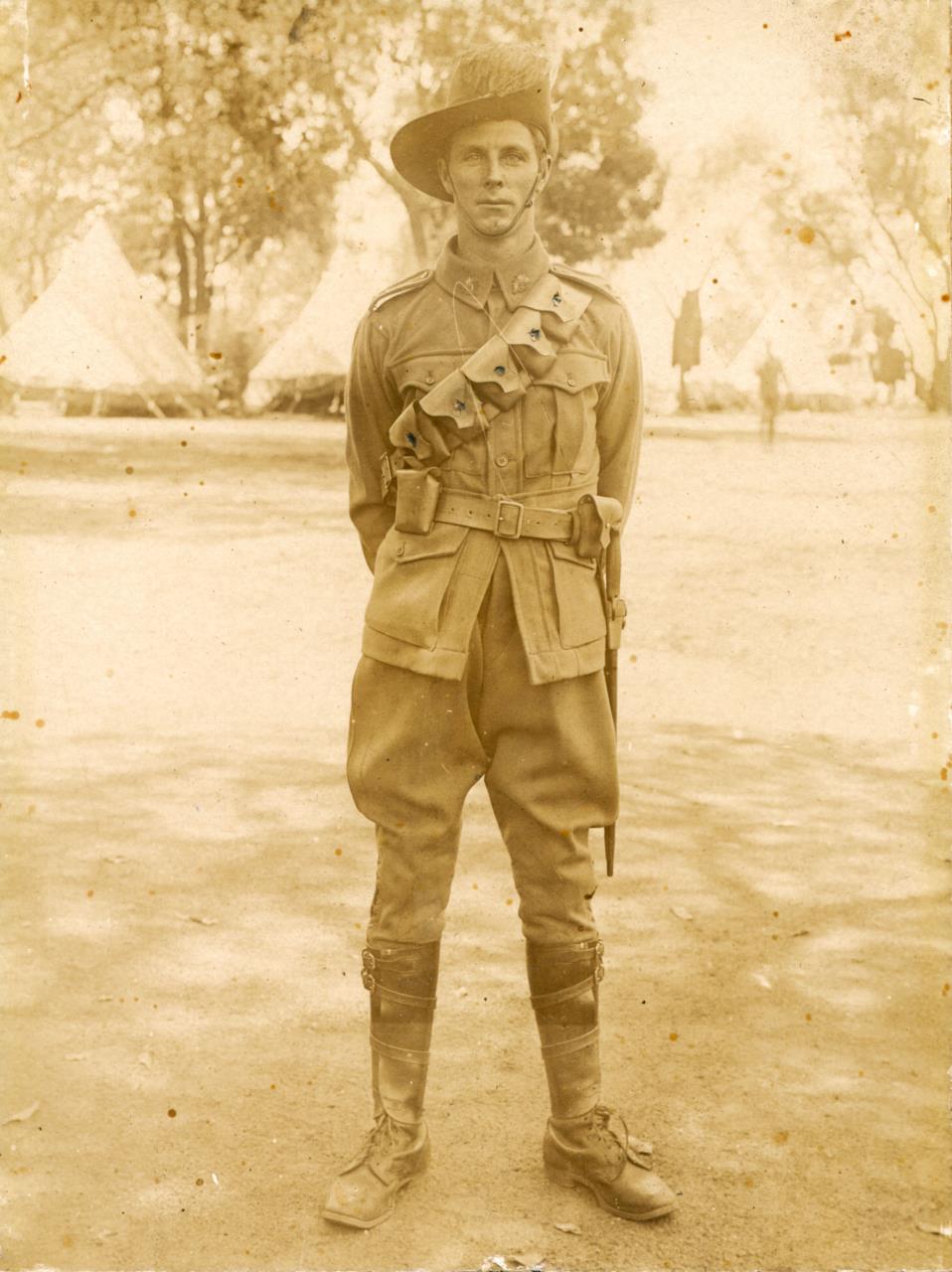
One of the stories from this collection belongs to 10th Light Horseman, Willie Betts and was shared by his granddaughter, Dixie Betts. Willie was born in York, his great-grandfather Richard arriving as a Swan River settler in 1830. When Richard established the property Turtle Creek at Guildford, lasting links were forged for the family to farming and country life. Returning from the war, Willie farmed at Dangin near Quairading and eventually retired to Subiaco, where he immersed himself in the wonders of his local library – but his favourite reads were the literary classics.
A letter written by Willie to his mother was read at today's main ANZAC service.
A transcript can be read below:
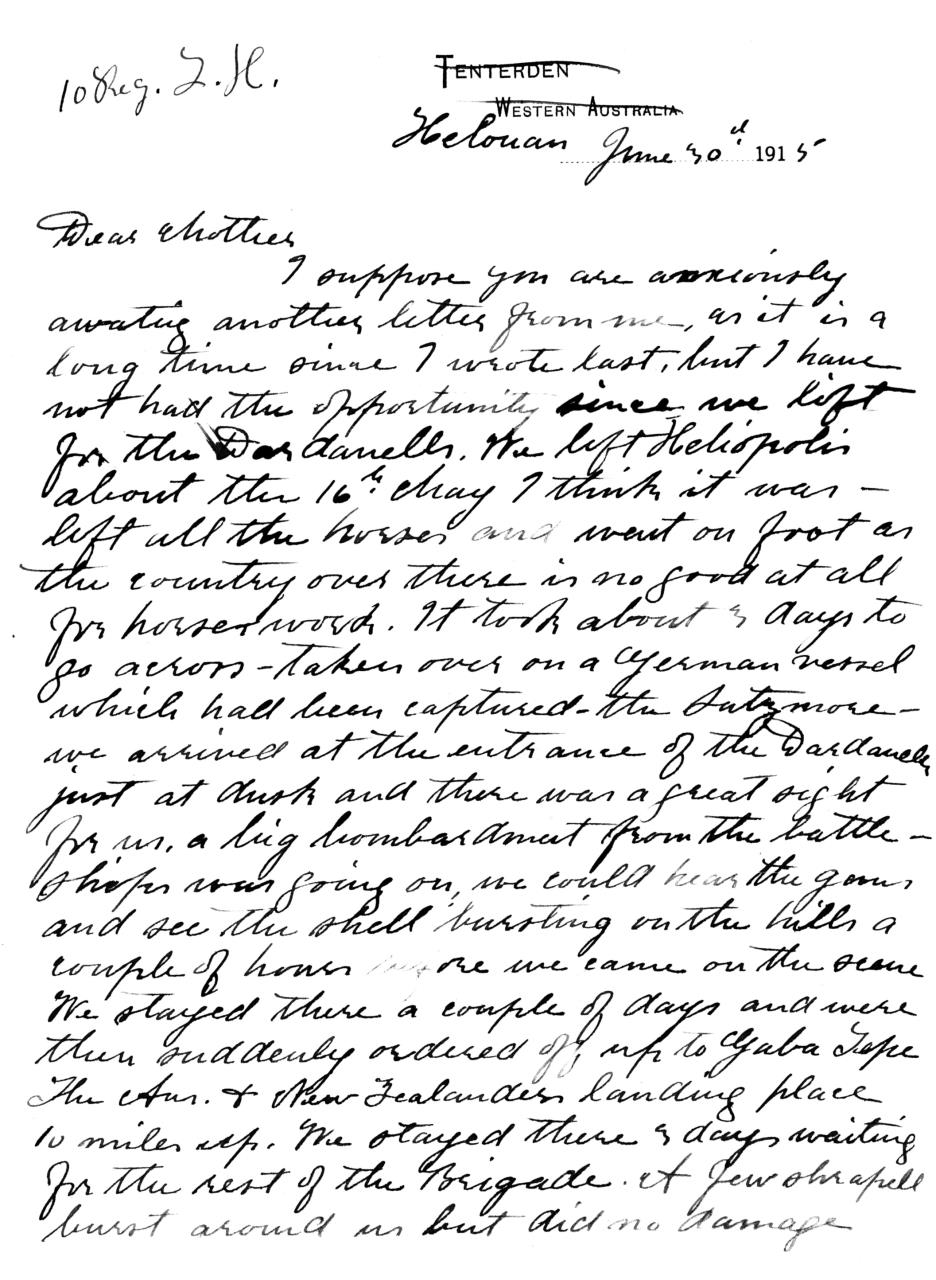
This letter was written by Pte William Albert BETTS, 10 LHR.
10 reg. L. H.
Helouan
June 30th 1915
Dear Mother
I suppose you are anxiously awaiting another letter from me, as it is a long time since I wrote last, but I have not had the opportunity since we left for the Dardanells.
We left Heliopolis about the 16th May, I think it was – left all the horses and went on foot as the country over there is no good at all for horsework. It took about 3 days to go across – taken over on a German vessel, which had been captured – the Lutzow. We arrived at the entrance of the Dardanelles just at dusk and there was a great sight for us. A big bombardment from the battleships was going on, we could hear the guns and see the shells bursting on the hills a couple of hours before we came on the scene.
We stayed there a couple of days and were then suddenly ordered off up to Gaba Tepe. The Australian and New Zealanders landing place 10 miles up. We stayed there 3 days waiting for the rest of the Brigade. A few shrapnell burst around us but did no damage.
The 8th and 9th rest of the Brigade – came up from Cape Helles on torpedo boats. We then got on to a torpedo boat and were taken close to the shore. There we got one man hit with a stray bullet. We then got on to open boats and were towed ashore by little pinnaces. Landed about 4 o’clock and started to make out dugouts, working till midnight with stray bullets whistling everywhere. Next day we shifted and made fresh dugouts. We were working away like bees when suddenly a few shrapnel burst among us and scattered us in all directions, but nobody was hurt.
Next day the regiment marched up the road to where there was more dugouts closer to the firing line.
They took the wrong road of course and marched up close to the firing line, turned round and came back; we were told afterwards by some of the older hands there that the snipers could not have been working or we should have lost anywhere from 30 to 50 men, so we shook hands with ourselves and got into our new dugouts.
Next day we got few more shrapnel just as we were cooking tea. It was amusing to see the scurry for dugouts. It put me in mind of a lot of boodies diving into a warren; the only thing that wasn’t amusing was that our Captain Nicholas got hit.
The next three days and nights we put in working in a big trench which is designed to avoid the spot on the main road commanded by the snipers, where a lot of men got potted. On Thursday 27th we went up into the supports at the firing line. That night our troops went into the support trench and stood there all night passing bags of sand along into the trench. The engineers, in driving a sap towards the Turks’ trenches, heard the Turks driving to us. They reckoned the Turks would get to us before we got to them, so they decided to blow their sap in. They put a dose of gun cotton in – filled her up with these sand bags and let her “went”. It woke the whole firing line up and there was a great fusillade for a while.
The next day our troupe had no sleep and went into the firing line. Friday 11 oclock. It was fairly quiet all day. We put a couple of volleys in about dusk and woke them up a bit. They seem to be a bit nervous, any little thing will bring from them a storm of bullets.
All that night was very quiet, just a few pot shots going on. We were wondering what was making things so quiet. We found out at 3 in the morning. Just when the moon went down the trench seemed to sway about and then seemed to split in two and turn inside out. They had got one mine home and blew the trench in. They immediately rushed us. The machine guns on both sides woke up. A few minutes after the artillery woke up, the things were busy. I heard afterwards there was only a couple got buried.
The next thing I knew after I had scraped myself out of the dirt the parapet of the trench was lined with bayonets. The Turks were lying under the parapet and poking their rifles over into the trench and firing them. Then came the bombs, they are worst of the lot, there’s no get away from them.
In daylight one does have a chance of picking them up and throwing them back, but on this occasion it was only just dawn and what with smoke and dust hanging in the trench, you could see nothing. One burst close behind me and I got some small fragments scattered about my left shoulder, some in the leg and one fragment went into my back about half the size of a bullet. It is still in there. They have not taken any of it out. It is all healed up now and I do not feel it at all.
But to return to the Turks. They got into the trench where it was blown in and got a hold of some of the posts. Then there was a proper go with bomb and bayonet.
For a while I had all the use knocked out of my hips with the bomb, but I pulled myself together and got firing again. The rifle got jammed from being red hot and I had to rely on the bayonet, when suddenly it was shattered by a bullet. Bill Baxter from the Frankland was next to me. He got wounded in the legs with a bomb, so I collared his bayonet. Then a bullet cut the right screw off the rifle and it flew into my right eye. Then a rifle went off about 6 inches in front of my face and I couldn’t see for a while, so had to knock off for a few minutes.
Eventually we got the Turks out and they retired to their own trenches. Then I crawled out of the trench down into the supports where an infantryman dressed me and then I was carried on a stretcher to the dressing station, redressed, then carried down to the beach and put on board the hospital ship, Gascon. I came to Heliopolis’ hospital and the next day they operated on my eye and took it out. It had to be done. It was completely gone. I stayed there 3 weeks and now I am at the Helovan convalescent hospital.
I suppose I will be sent home now. I believe that is what they are doing with one eyed men. Some they keep on light duty in Egypt. Bill Baxter & Teddy Brown from the Frankland were wounded but only slightly. I will have to shut up now – no more paper. I got dad’s letter of May 8th – will write again when I get more paper.
W
Back to All News